
Kristina Romanova
special project Curator
Curator of group and solo exhibitions by Russian and international artists, educational projects, and public programs accompanying exhibitions. Curator at Triumph Gallery for over 10 years.
Special project
August 18 – November 20, 2025
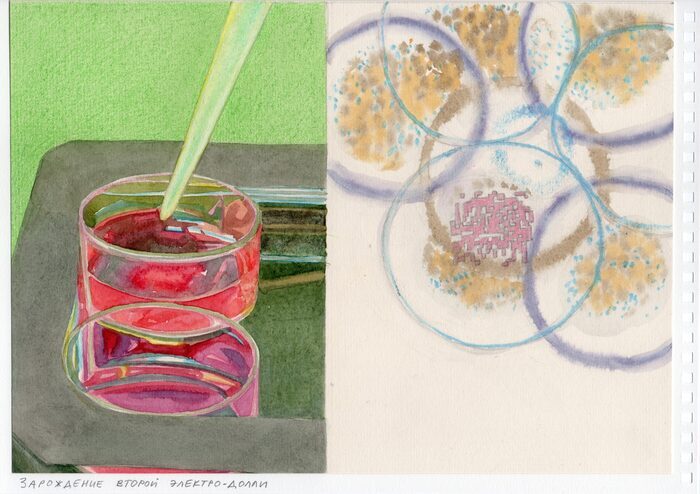
“A Complex Mixture / Assemblage of Complexity” is an interdisciplinary exhibition project of the First International Biennale of Environmental Art, created for Mayak Academy as a response to the complexities and contradictions of the Atomic Age, which became the cutting edge of modernity for several generations.
In the early 1980s, intellectuals at the forefront of nuclear criticism suggested that technologies for harnessing intranuclear forces were so significant that they transformed how meaning is produced in language and culture.
“One way or another, the exhibition foregrounds the relationship between industry and nature—local nature, nature in general, and the nature of things. The title ‘A Complex Mixture’ refers, in part, to the population of industrial cities and to the complex, strange lives of people who worked at strictly guarded, restricted facilities while remaining free, creative, thinking people. For me, that is the most important thing about this exhibition,” said Dmitry Khankin, managing partner of Triumph Gallery.
The exhibition’s title and route evoke a multifaceted, layered synthesis of archival and contemporary, documentary and artistic material. The narrative moves from fascination with the scale of big science toward an awareness of new global interconnections and responsibilities in a world where humanity has gained control over intranuclear forces, turning them into the potential for new interactions. This is explored by placing objects from the artistic heritage of several nuclear cities alongside scientific photographs from nuclear laboratories, and technological developments alongside the biographies of artists and nuclear scientists. Bringing disparate elements of the curatorial research together into a complex mixture gives rise to the exhibition’s three main sections: “Scale,” “Complexification,” and “Entanglement.” The urban environment shaped by the nuclear industry runs throughout the project.
“By making the reflections of contemporaries and later generations on the harnessing of nuclear energy in the USSR part of the exhibition, we invite viewers to recognize the dominant modes of display and exoticization without limiting themselves to them, leaving room for a complex mixture of words and things, traces and destinies,” says academic consultant Galina Orlova.
The exhibition brings together graphic art, photography, objects, and installations by contemporary artists from Vladimir, Zarechny, Krasnoyarsk, Moscow, Nizhny Novgorod, and Sarov, alongside rare archival materials from municipal and federal collections in Dubna, Yekaterinburg, Obninsk, and St. Petersburg. Visitors will see paintings by renowned theoretical physicist Dmitry Blokhintsev; the original 1967 poster “Let the atom be a worker, not a soldier!”; 1990 logo sketches for Beloyarsk Nuclear Power Plant by the art group Atomic Province; unique photo archives by Yuri Tumanov from the Joint Institute for Nuclear Research’s Laboratory of High Energy Physics; and the personal photo archive of Vladislav Solovyov, chronicler of the first science city.
“Eighty years of the national nuclear industry is a story of achievement that has always made room for creativity and humanistic reflection. The special project ‘A Complex Mixture’ is a landmark event for us in this anniversary year. It is not simply an exhibition, but a profound dialogue between science, history, and contemporary art—a bridge between the past and present of the nuclear industry. Unique artifacts and works by contemporary artists create that very ‘complex mixture’ of meanings of the Atomic Age. We are delighted that Mayak Academy has opened a space for such a many-voiced and honest conversation about the industry’s journey and its place in society. Through the lens of art and archival evidence, we see not only the heroic story of its early years, but also its living, considered continuation in the work of contemporary artists. Visitors will be able to experience the spirit of the era, understand the many facets of our heritage, and see how the peaceful atom’s mission, established 80 years ago, continues to inspire artists today,” said Anna Zhigulskaya, Director of the Rosatom State Corporation’s Internal Communications and CSR Project Office.
— Polina Mogilina, curator of the special project










special project Curator
Curator of group and solo exhibitions by Russian and international artists, educational projects, and public programs accompanying exhibitions. Curator at Triumph Gallery for over 10 years.